Back to All Research Projects
Prediction Modeling•2025•Ongoing Project
Digital Twin 3D Hydrodynamic Moisture Flux in Kashmir Soils
Funding AgencyAI & Computational Agronomy Board
Timeline / Duration2025 – 2027 (36 Months)
Trial LocationComputational Agronomy Center, Srinagar
Lead InvestigatorComputational Soil Modeling Group, SKUAST-K
14 DaysForecast Horizon
1 cm³ GridSimulation Res
96.1%Model Concordance
Cloud HPCCompute Platform
Research Background & Methodology
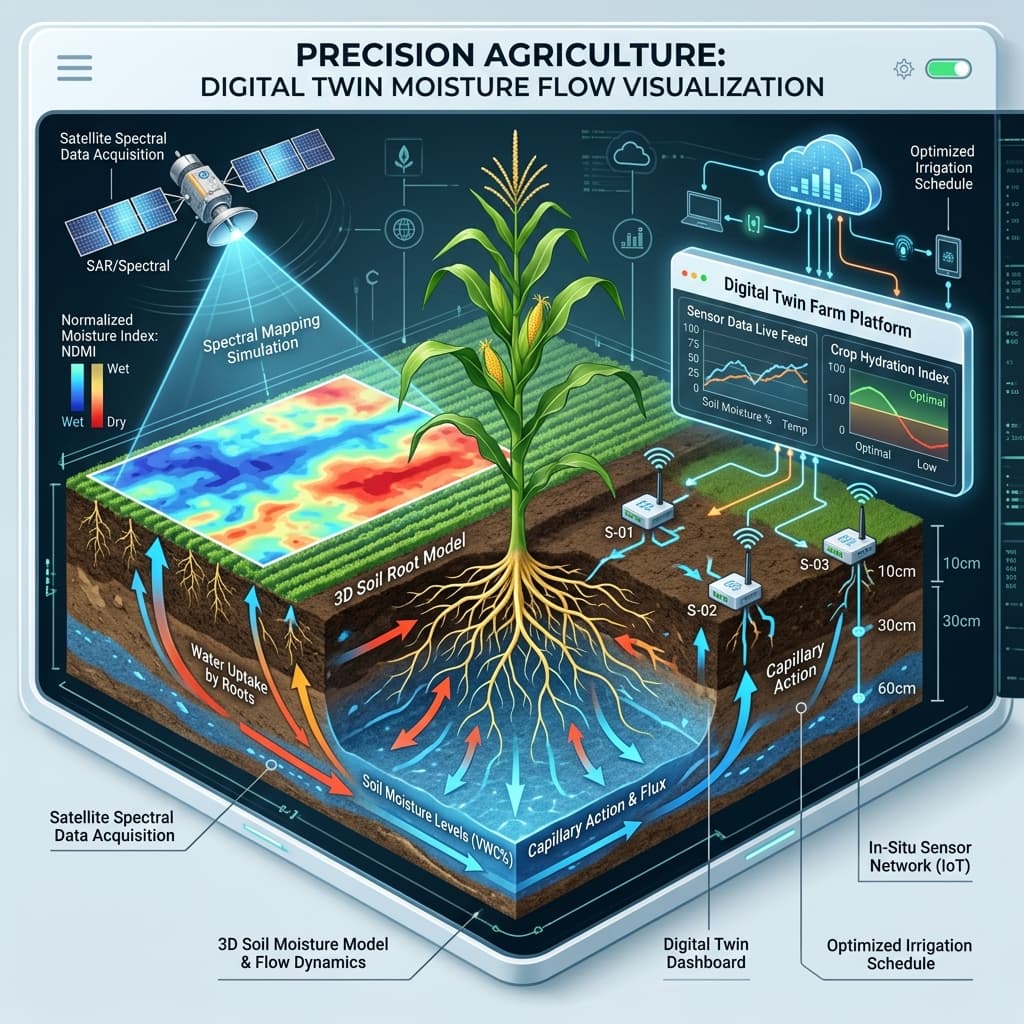
Constructing a high-fidelity computational digital twin of orchard and cereal soil-plant-atmosphere continuums (SPAC). Utilizing 3D Richards equation numerical solvers and root uptake sink terms, the platform dynamically simulates unsaturated zone moisture fluxes, capillary rise from shallow water tables, and climate change scenario resilience.
Key Objectives & Milestones
- Formulate 3D finite-element hydrological simulation meshes calibrated to local soil water retention curves (SWRC).
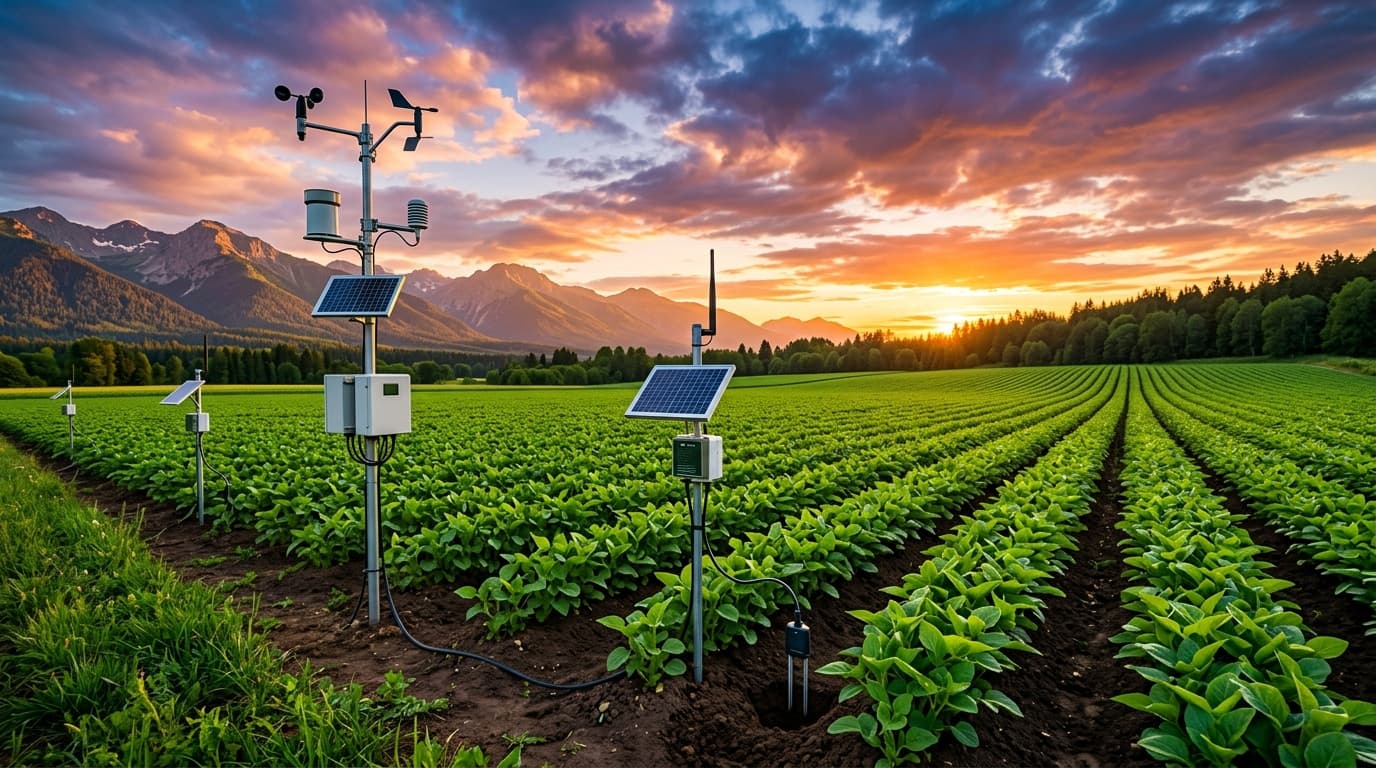
- Integrate live edge IoT telemetry feeds for real-time model state-updating and boundary condition assimilation.
- Forecast root-zone moisture deficit thresholds up to 14 days in advance under warming climate projections.
- Deploy an interactive web-based digital twin cockpit for research agronomists.
Key Empirical Discoveries & Impact
01
Early Deficit Forecasting
Accurately predicted critical root-zone wilting thresholds 10 days in advance of field sensor indications.
02
Root Flux Resolution
Resolved differential layer-specific water uptake across deep taproots versus shallow lateral fibrous root systems.
03
Scenario Stress Testing
Simulated heatwave shock events to evaluate protective irrigation pulse timing.