Drought Resilient Alfalfa Production (D-RAP)
Research Background & Methodology
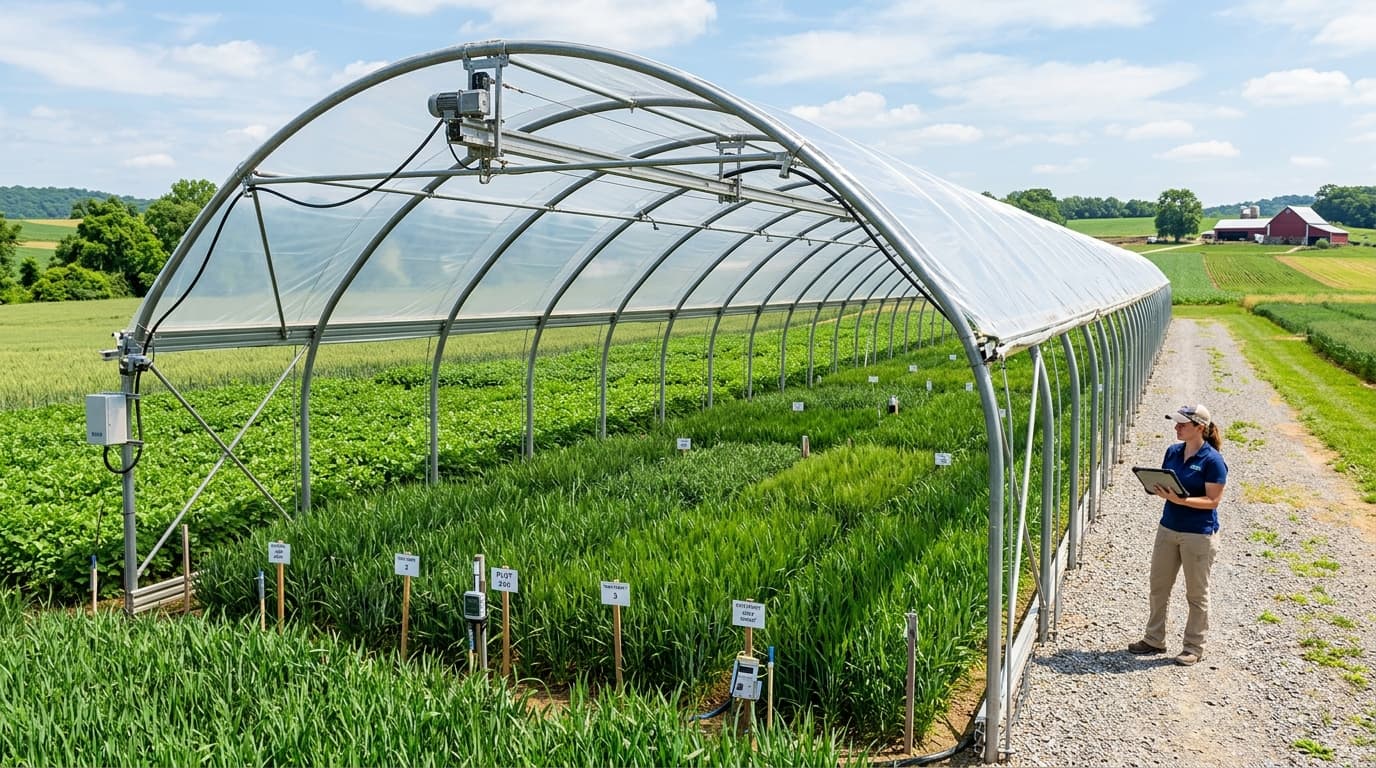
The D-RAP project investigates the physiological, biochemical, and morphological mechanisms enabling perennial alfalfa (Medicago sativa L.) cultivars to thrive under severe moisture-deficit conditions in temperate climatic zones. Utilizing automated, motorized rainout shelters coupled with continuous in-situ root-zone profiling, the research evaluates drought recovery kinetics, biomass accumulation, and crude protein persistence across controlled soil moisture gradients.
Key Objectives & Milestones
- Quantify root architecture depth and density distributions under progressive terminal moisture stress.
- Evaluate non-destructive spectral vegetation indices (NDVI, NDRE) for rapid drought-stress phenotyping.
- Determine physiological stomatal conductance and water-use efficiency (WUE) under variable deficit regimes.
- Develop actionable agronomic management protocols for high-altitude drought-vulnerable forage growers.
Key Empirical Discoveries & Impact
Drought-Adapted Cultivar Selection
Identified two superior cold-and-drought resilient germplasms exhibiting 28% higher deep-root biomass and enhanced stomatal regulation during extended dry spells.
Spectral Stress Delineation
Calibrated red-edge spectral indices that detect cellular hydration deficits 4 to 6 days prior to visible canopy wilting symptoms.
Biomass & Protein Retention
Demonstrated that targeted pulse deficit irrigation maintains 91% of baseline crude protein content while reducing seasonal irrigation volume by 32%.